
ACTIVITIES
CASTOR aims to address the critical conservation needs of Pelasgus laconicus and Squalius keadicus through a multi-faceted approach combining species translocations, habitat restoration, invasive species management, and community engagement. The activities are structured to tackle the most pressing threats to these species, such as habitat fragmentation, pollution, water scarcity, and competition from invasive species. Below is a comprehensive description of the activities, methodologies, and of stakeholders involved.
Ι. Species Translocations and Population Reinforcement
This activity focuses on stabilizing and increasing the population size of P. laconicus and S. keadicus in the Evrotas River Basin by conducting carefully planned conservation translocations.
- Habitat Suitability Assessments: Based on ad-hoc fish samplings, S. keadicus has been extirpated from almost all tributaries of the Evrotas River while P. laconicus displays a fragmented distribution. Habitat suitability assessments will follow standardized procedures developed under the European research project FAME (Schmutz et al., 2007), with some modifications (IMBRIW, 2013). All sampling will involve a single electrofishing pass without using stop nets. However, in each case, special attention will be given by the surveying team to sample river stretches that will be demarcated by physical barriers or will exhibit distinct habitat changes (e.g., shallow riffles), in order to minimize fish escape.
- Implementation of Translocation Actions: Conservation translocations will be performed based on IUCN Guidelines for reintroductions (IUCN, 2013) and the relevant scientific literature. For the in situ translocations with wild spawners, these will include (a) an initial feasibility assessment of the potential release water bodies (tributaries) and source water bodies (at the Evrotas main stem) and optimal stocking density assessment; (b) the implementation of the translocation actions, following best practice guidelines on sourcing founders, frequency of releases, fish handling/transfer, as well as timing and mechanisms of release and; (c) the post-release monitoring of the success of the actions, with established methodologies. Translocations will be also conducted with juvenile fish bred in the laboratory, after successful reproduction of spawners collected from the wild.
ΙΙ. Habitat Restoration and Connectivity Improvement
Habitat restoration will be a core component of the Project, focusing on creating and enhancing critical habitats, such as summer refugia and fish passages, to ensure the long-term viability of the target species.
- Construction of Nature-based Solutions (NbS): CASTOR will carry out essential habitat restoration in designated areas by constructing summer pool habitats using beaver dam analogs (≥4) in selected tributaries of the Evrotas Rive to create summer refugia. Restoration experts and hydrologists will be involved in designing and constructing these structures.
- Fish Passage Construction: Nature-based fish passages (≥4) will be constructed at key barriers (e.g., irrigation weirs and road crossings) to enable fish to bypass obstacles and access upstream and downstream habitats. The technical specifications and the number for these constructions will be defined based on hydrological and hydromorphological assessment and modeling, laboratory fish swimming. Hydraulic engineers and river ecologists will collaborate on these structures to optimize flow rates and passage dimensions.
ΙΙΙ. Invasive Species Control and Habitat Enhancement
The presence of the invasive Oncorhynchus mykiss poses a significant threat to the native fish fauna of the Evrotas River. This activity focuses on controlling escapees of Oncorhynchus mykiss in key habitats to minimize predation on native fish larvae and competition for food.
- Oncorhynchus mykiss Removal: The Project will conduct targeted Oncorhynchus mykiss removal of the frequent escapees from a local fish farm and illegal stockings, using physical removal (electrofishing and netting). The removal of O. mykiss will be conducted using physical capture methods (following the methodology described in Kalogianni et al., 2024 with modifications), including electrofishing, carried out by trained staff in selected areas based on previous trout records. Electrofishing will utilize DC equipment to minimize stress and avoid injury.Captured individuals will be handled humanely. To reduce handling stress and facilitate safe transport, fish will be sedated using clove oil (eugenol) diluted in water, followed by placement in cold water to maintain low metabolic activity during transfer. This method ensures minimal physiological stress while allowing the fish to remain viable. Instead of euthanasia, all captured O. mykiss individuals will be returned to the originating aquaculture facility, in coordination with facility managers.
- Monitoring of Invasive Species Impact: Following removal efforts, native fish populations will be monitored to assess potential changes in survival and recruitment rates. Standardized fish sampling techniques will be employed to quantify changes in population dynamics.To evaluate the effectiveness of removal efforts, post-intervention monitoring will be implemented. Standardized electrofishing will be conducted in treated areas to assess changes in native fish abundance. Data collected will inform adaptive management and guide future invasive species control strategies.
IV. Stakeholder Engagement and Community Awareness
The involvement of local communities is crucial for the long-term success of conservation efforts. This activity will focus on building awareness, fostering stewardship, and promoting sustainable water management practices among local stakeholders.
- Development of a Stakeholder Engagement Plan (SEP): A comprehensive SEP will be developed to guide community consultations, workshops, and outreach activities. The SEP will identify key stakeholder groups (e.g., farmers, local municipalities, schools) and tailor engagement strategies to their specific needs and concerns.
- Educational Workshops and Consultations: CASTOR will organize a series of workshops targeting different stakeholder groups, focusing on topics such as sustainable water use, the ecological value of the Evrotas River, and practical conservation measures.
- Creation of Educational and Promotional Materials: CASTOR will produce a variety of educational materials, including brochures, and fact sheets, to communicate project outcomes and the importance of freshwater conservation. These materials will raise awareness among stakeholders (mostly farmers, also involved in animal husbandry) and the wider public around the project areas about the importance of river conservation. This increased awareness may lead to greater community engagement in the conservation of the fragile Mediterranean riverine ecosystems and foster a sense of stewardship among local residents.
- Project Website and Social Media Campaigns: A dedicated project website and social media accounts will be developed to share updates, reports, and success stories. This online presence will serve as a platform for engaging a broader audience and maintaining visibility for the Project. Social media platforms such as Facebook will also be utilized to reach a broader audience and engage with stakeholders in real-time.
V. Monitoring and Evaluation
Robust monitoring and evaluation are essential for tracking progress and ensuring that project activities lead to the desired conservation outcomes. This activity will involve the implementation of a comprehensive monitoring plan using both traditional and innovative techniques.
- Pre- and Post- Restoration Monitoring: Standard fish sampling methods (e.g., electrofishing, seine netting) will be used to assess baseline conditions and track changes in fish populations and habitat quality over time.
- Environmental DNA (eDNA) Monitoring: eDNA sampling will be used as a non-invasive tool to detect the presence and abundance of target species and invasive species in restored and control areas. This method will complement conventional sampling techniques and provide early detection of species presence.
- Data Analysis and Reporting: Monitoring data will be analyzed to evaluate project outcomes and inform adaptive management. Annual reports will be prepared and shared with stakeholders, detailing the progress and lessons learned from each intervention.
New water level monitoring system by HCMR at Kastori stream
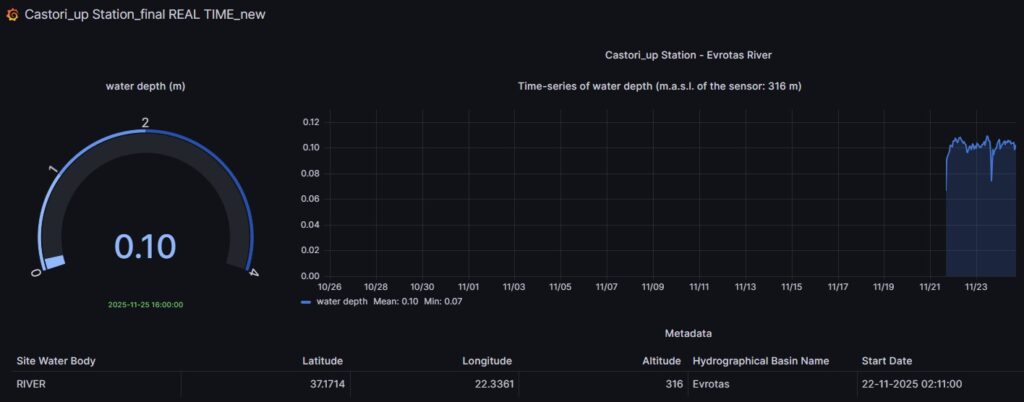
You can now receive real-time updates on the water level of the Kastori stream of the Evrotas River through the new gauge recently installed by HCMR.
The gauge provides continuous measurements, contributing to better monitoring of hydrological conditions and the overall management and protection of the river ecosystem.